
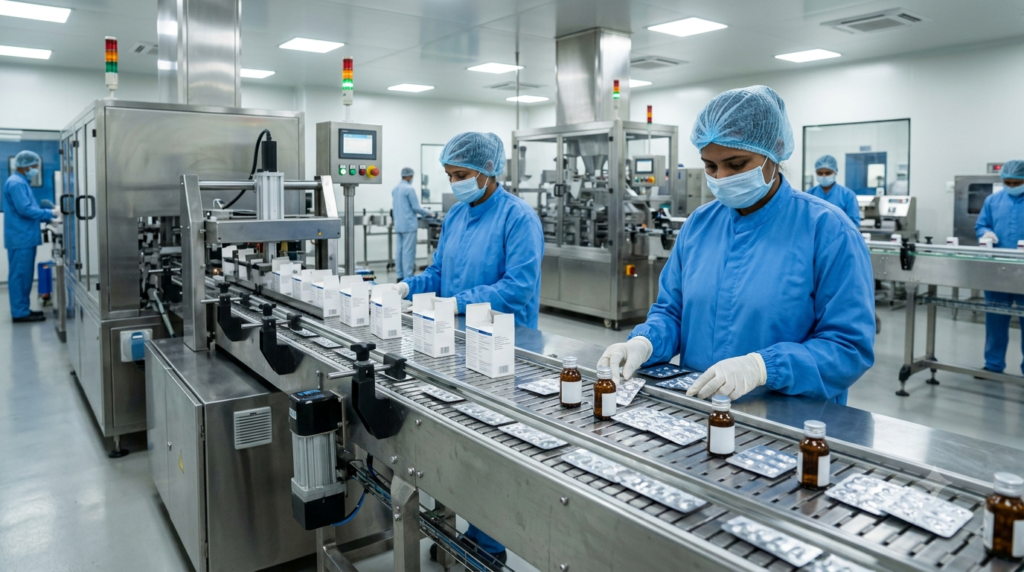
Pharmaceutical packaging is much more than a way to present a medicine. It helps protect the product during storage, transportation, and handling while also providing important information for identification and traceability.
A well-designed packaging system forms an important part of pharmaceutical product quality.
Why Is Pharmaceutical Packaging Important?
Medicines can be affected by environmental and physical factors during their lifecycle.
Packaging can help protect products against factors such as:
- Moisture
- Light
- Contamination
- Physical damage
- Environmental exposure
The appropriate packaging system depends on the characteristics of the pharmaceutical product.
Common Pharmaceutical Packaging Formats
Blister Packs
Blister packaging is commonly used for tablets and capsules and provides individual compartments for doses.
Bottles
Bottles may be used for tablets, capsules, powders, and liquid pharmaceutical products.
Sachets
Sachets can be used for powders, granules, and selected pharmaceutical formulations.
Cartons
Secondary cartons can provide additional protection and carry important product information.
Packaging and Traceability
Pharmaceutical packaging also supports product identification and traceability.
Important information may include:
- Product name
- Batch information
- Manufacturing information
- Expiry information
- Storage instructions
- Regulatory information
Accurate labeling is essential because incorrect labels can create significant risks.
Packaging During Distribution
Packaging must also support the product during transportation and storage.
Depending on the product, manufacturers and distributors may need appropriate controls for temperature, humidity, handling, and other environmental conditions.
WHO GMP guidance includes packaging, labeling, storage, and distribution within the broader pharmaceutical production and quality system.
Packaging and Patient Safety
For patients, packaging provides essential information about how a product is identified and handled.
Tamper-evident features and appropriate packaging design can also contribute to product integrity.
Conclusion
Pharmaceutical packaging is an essential part of the product lifecycle. It helps protect medicines, support traceability, provide important information, and maintain product integrity from manufacturing through distribution.
Effective pharmaceutical packaging therefore combines protection, functionality, compliance, and clear communication.